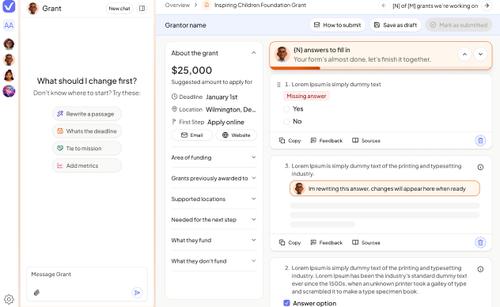
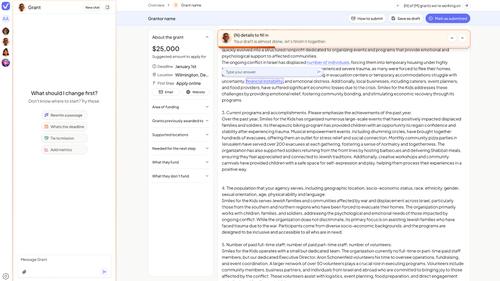
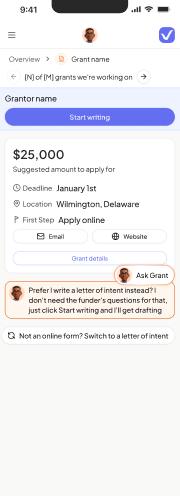
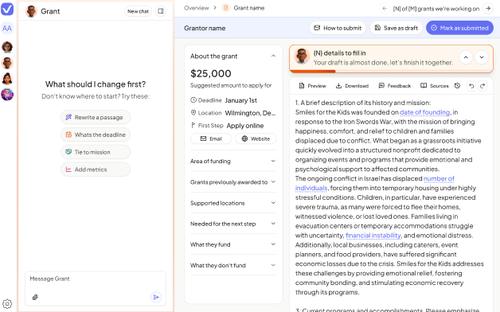
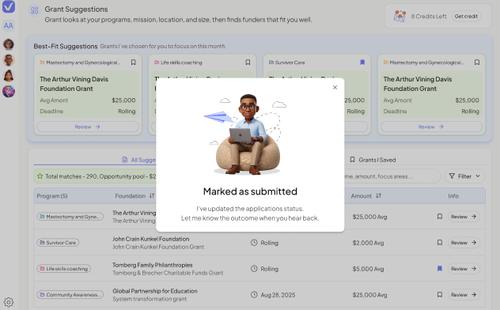
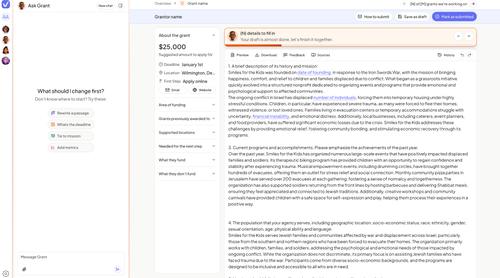
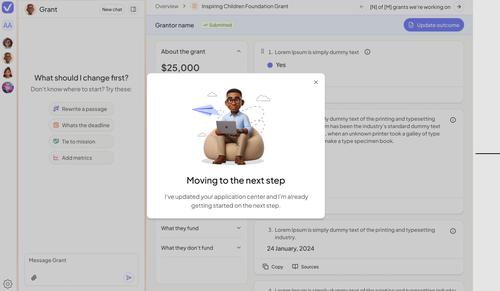
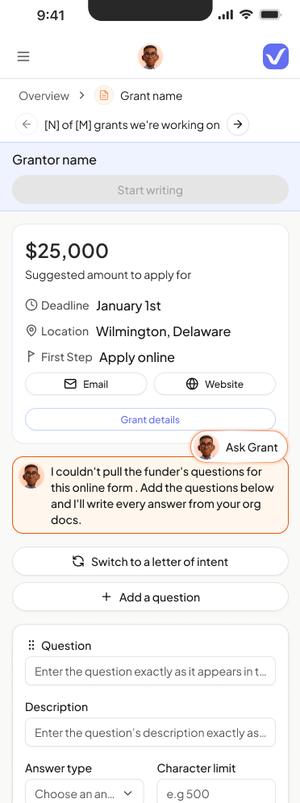
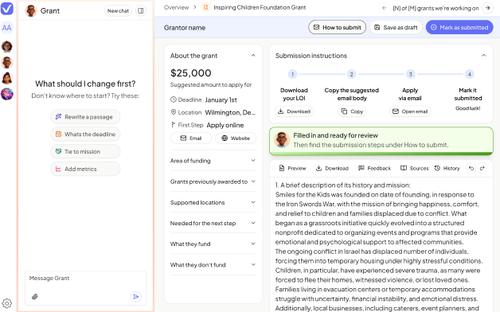
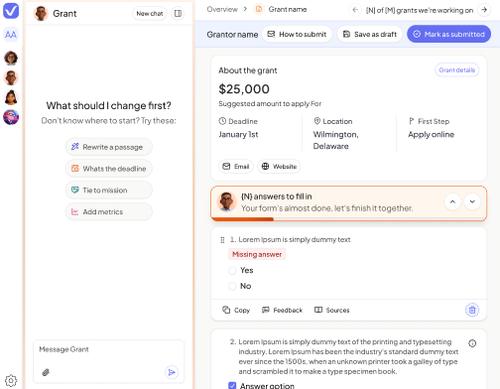
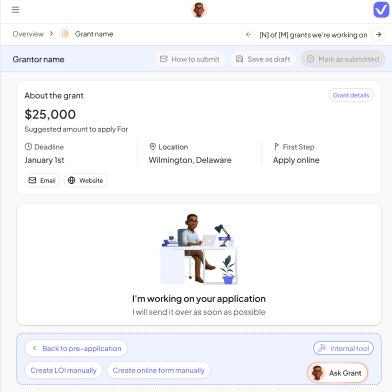
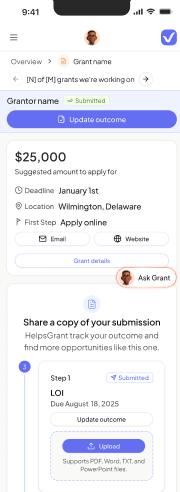
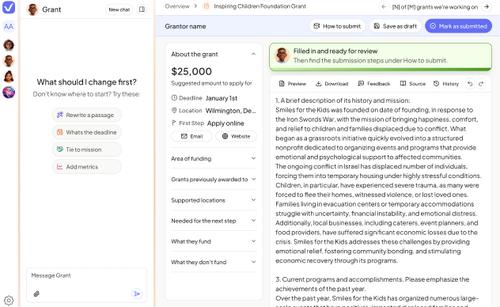
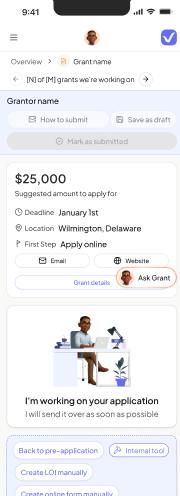
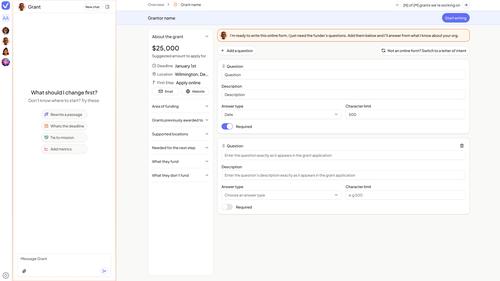
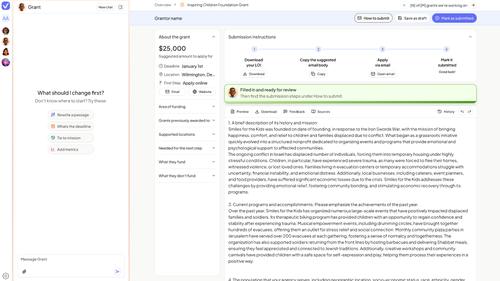
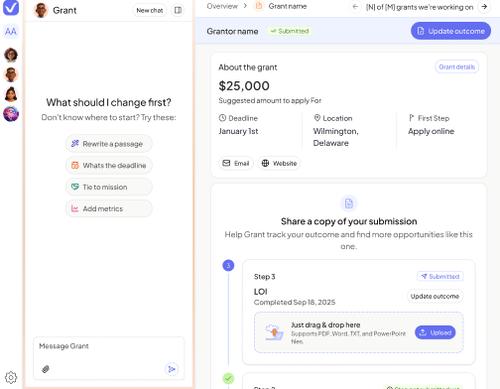
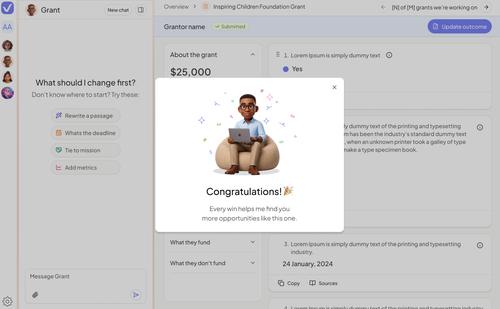
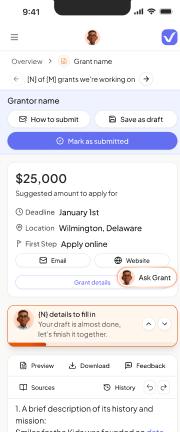
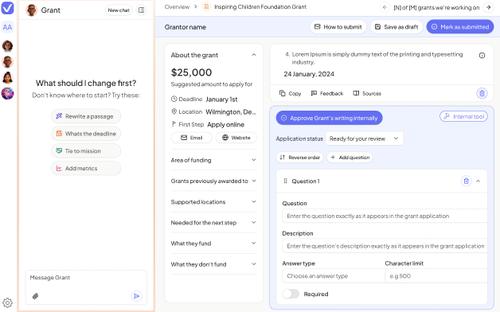
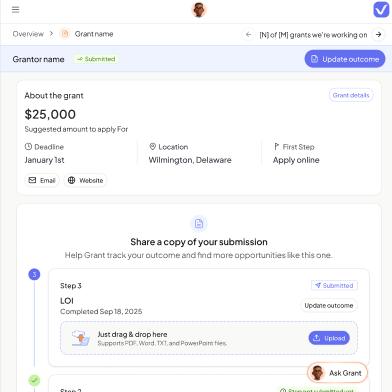
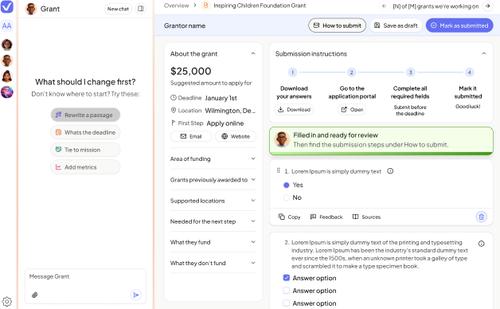
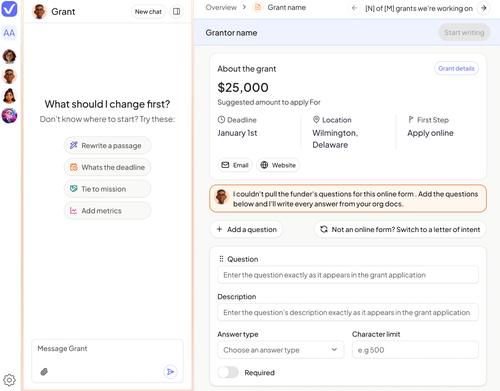
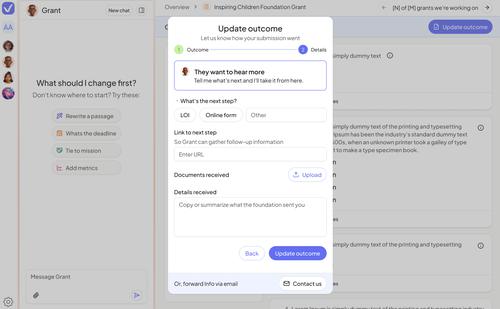
From the Figma file
Every state, designed before it was built. Empty documents, lost grants, tablet and mobile got the same care as the happy path - the unhappy states are where an expert decides whether to trust the tool.An AI that drafts your grant - but never sends it for you.
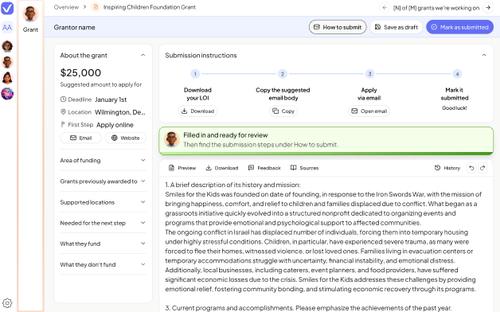
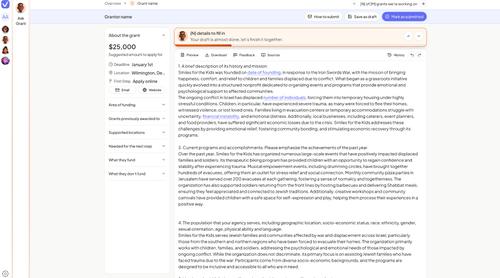
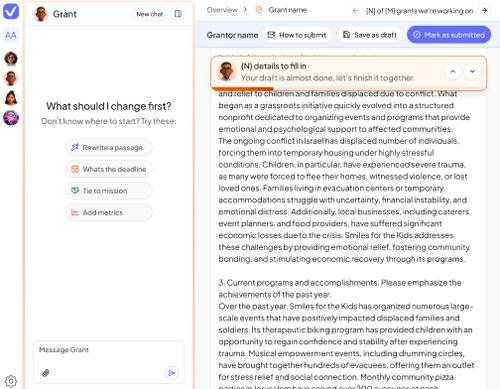
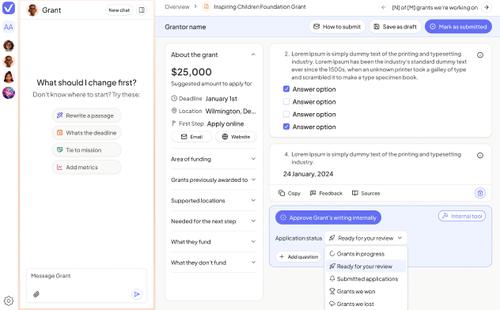
Grant gets you ready - then stops. The whole trust model in one loop. Grant closes the last gaps and rewrites on request, but every change stays visible and reversible, and the one step you can’t undo - sending - never leaves your side of the line.
Project overview
Grant writes grant applications for nonprofits - drafting the Letter of Intent, or filling out the funder’s online form, grounded in an organization’s own history and context.
But a grant application isn’t a blog post. It goes to a funder, under your name, and your funding depends on it. So the problem was never “can the AI write it.” It was how do you hand a machine-made draft to an expert with everything on the line - in a way they trust enough to send?
My role
Set the strategy and designed the whole workspace, from the first AI draft to the final submission.
An AI that advises but never acts for you - the expert keeps the part that matters.
Flows to high fidelity, shaping the review experience around how people actually work.
Partnered with engineering and the writing-engine team from concept to shipped.
The challenge
Nonprofit teams pour an hour or more into each application, second-guessing every line, because a weak or generic draft can quietly cost them the opportunity.
AI can write the first draft in seconds. The hard part is trust. The draft isn’t the finish line - it’s the start of a review, and the review is where the design work lives.
Listening to grant writers
The same few things came up again and again. Each one maps straight to a problem - and to a decision on the page.
The blank page was never really the problem. It’s the fear of sending something that sounds a little off.Executive Director
I can get a draft in seconds now. But I’m not sending anything to a funder that I didn’t read three times.Grants Manager
If the AI gets one thing wrong, I stop trusting all of it.Development Lead
 Updated the amount
One workspace, not two
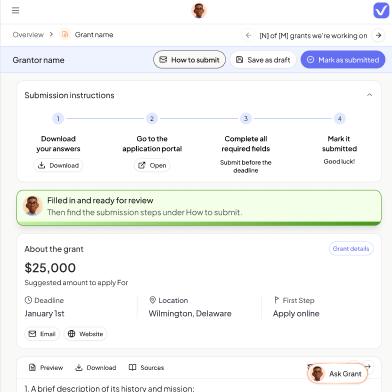
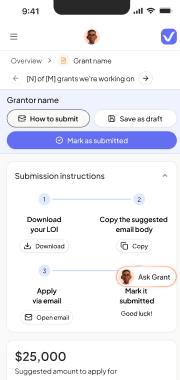
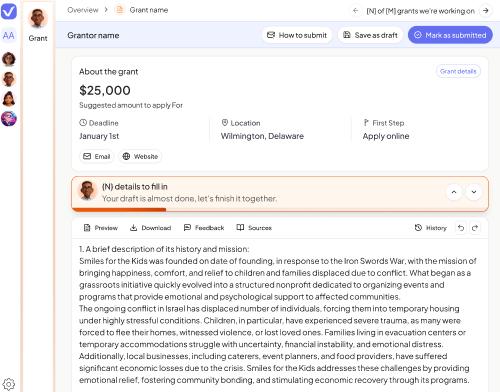
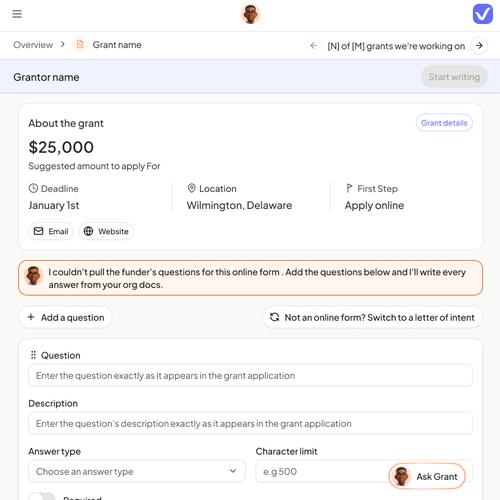
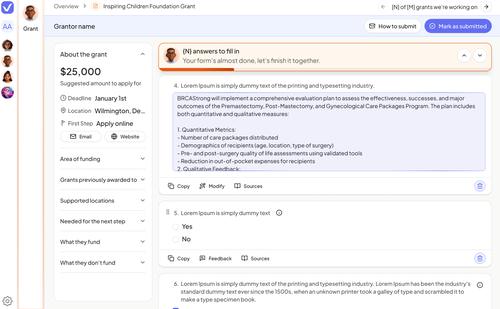
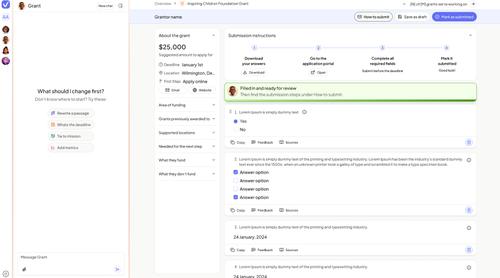
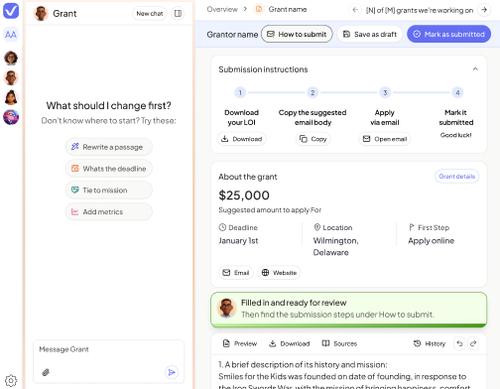
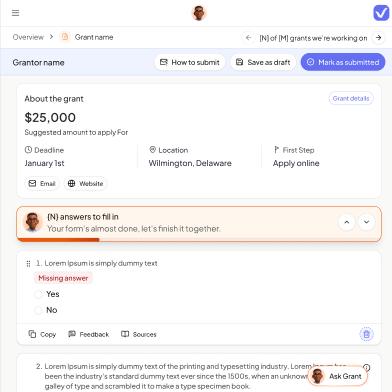
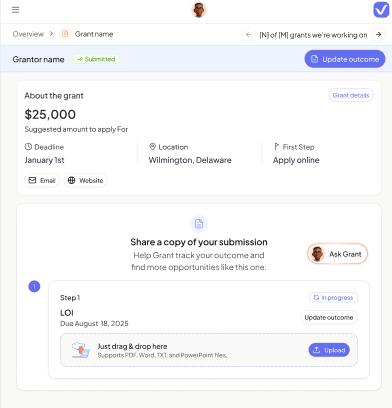
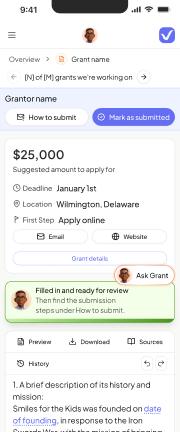
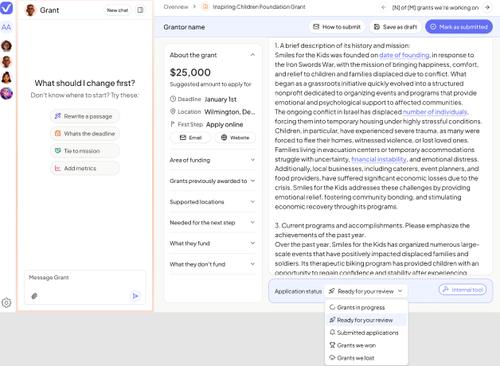
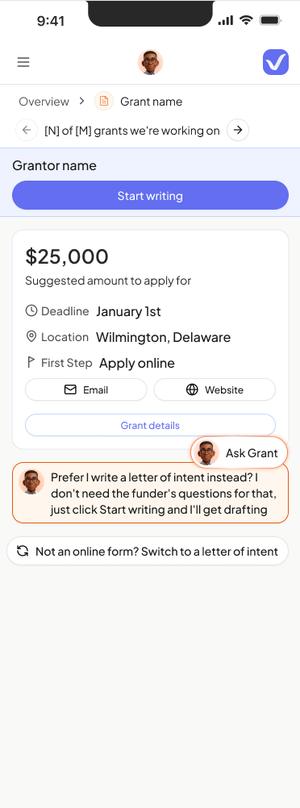
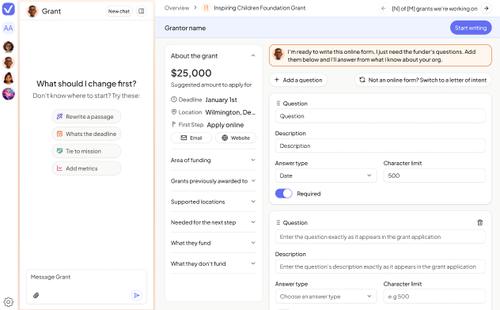
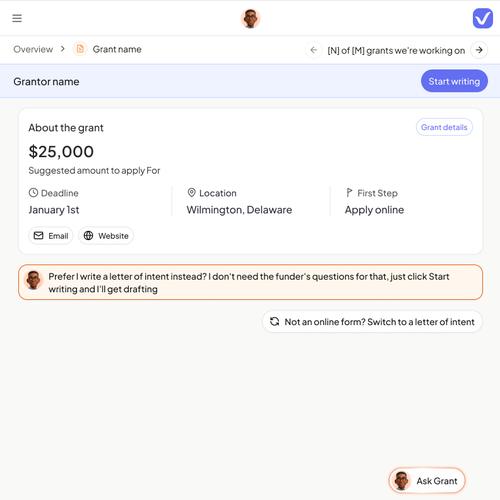
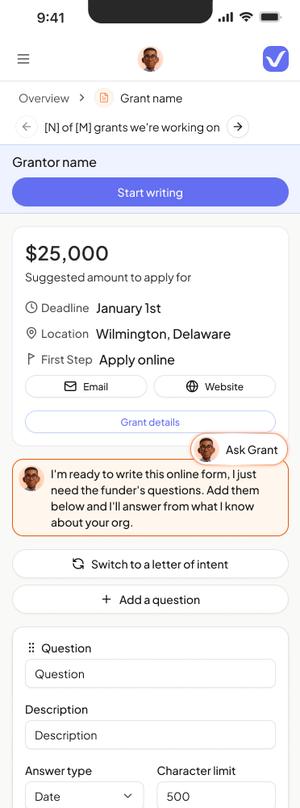
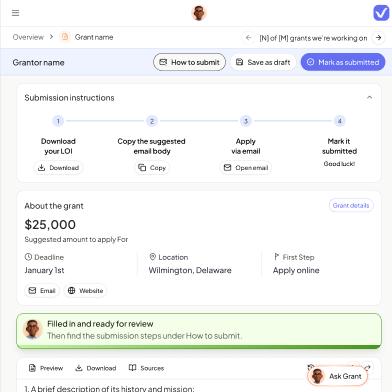
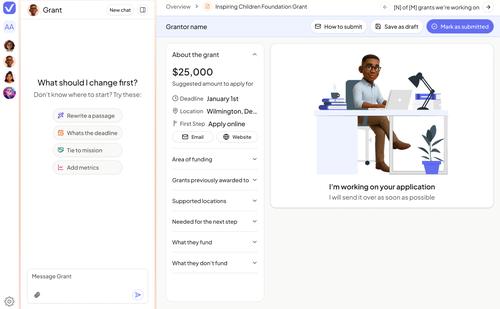
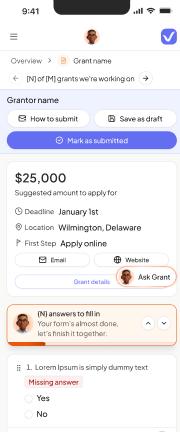
A Letter of Intent is continuous prose. An Online Form is the funder’s questions. Two products on the surface. I designed them as one shell - header, funder sidebar, sources, versions, submission and outcome are shared - that only diverges where the medium does. You learn one workspace, and it holds from desktop down to a phone.
The decision the page turns on
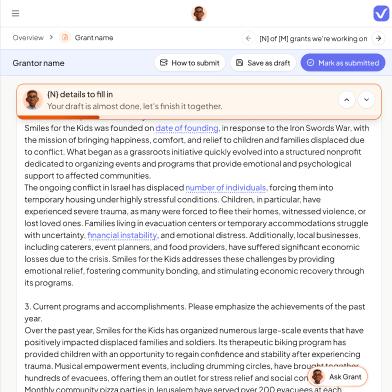
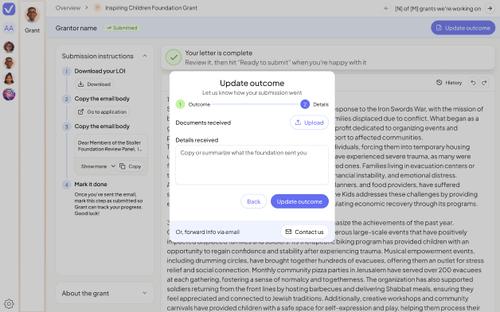
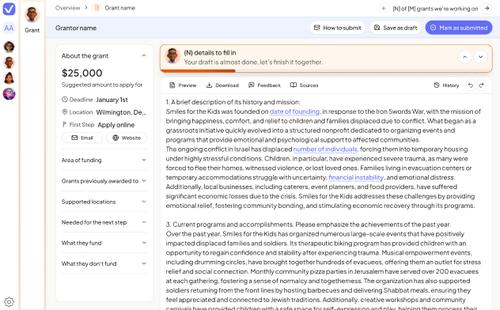
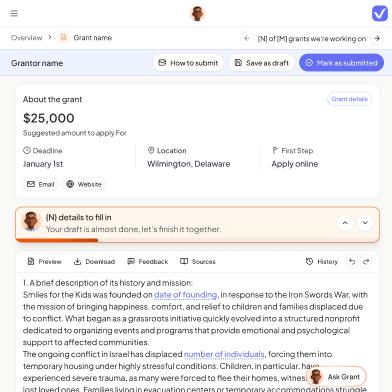
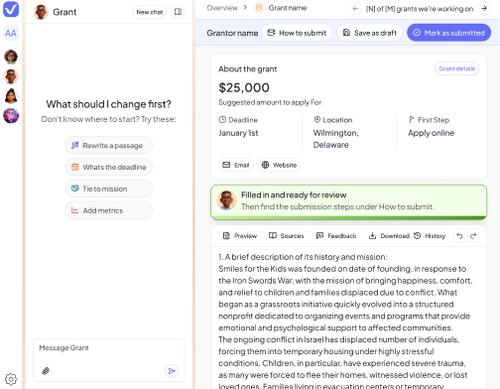
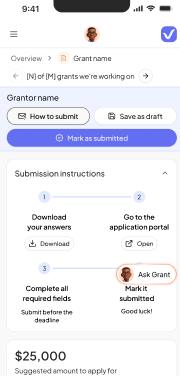
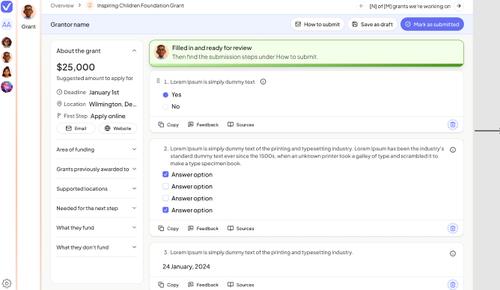
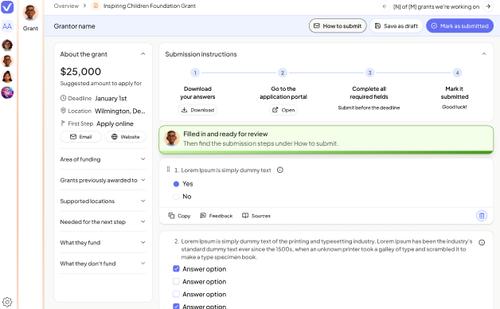
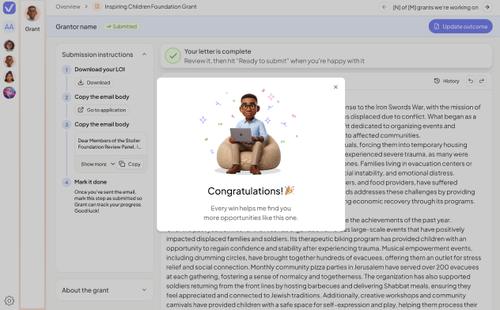
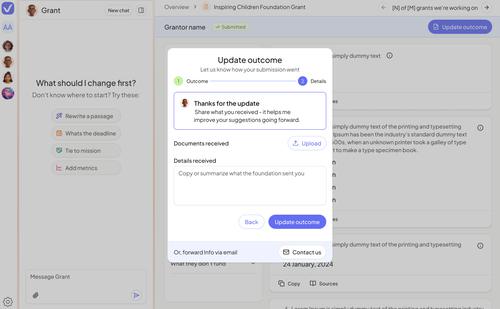
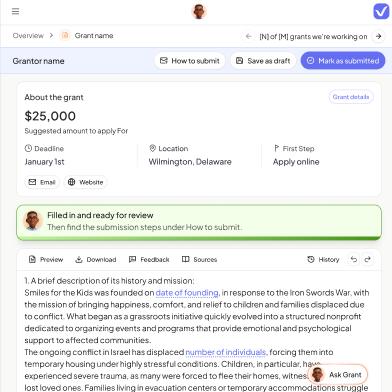
It writes the draft, then shows you how to send it yourself. The last, irreversible step stays with you.
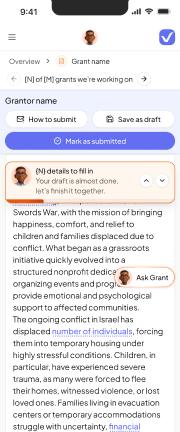
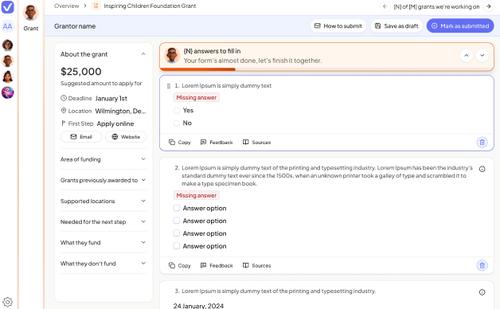
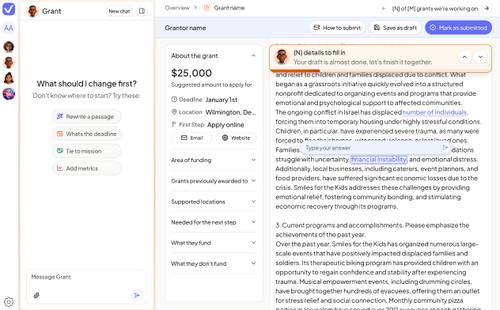
A counter shows what’s unfilled, warming toward green - but it never blocks you. You decide when it’s ready.
A short prompt reminds you Grant can get it wrong. Naming that is what earns it the rest.
I can get things wrong. Read it through once - especially names, dates and amounts.
Editing with Grant
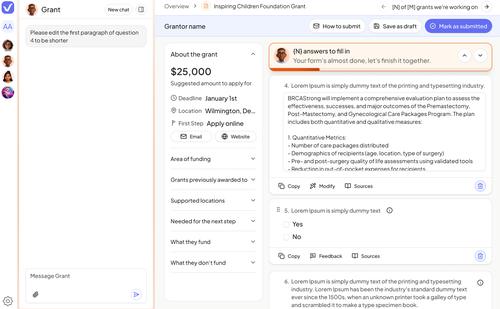
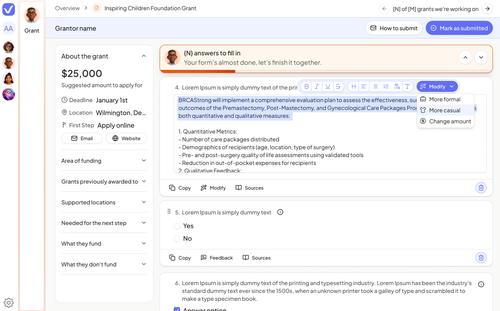
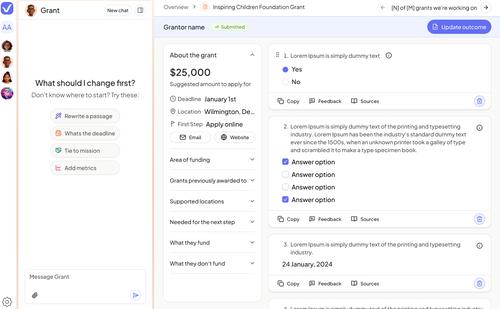
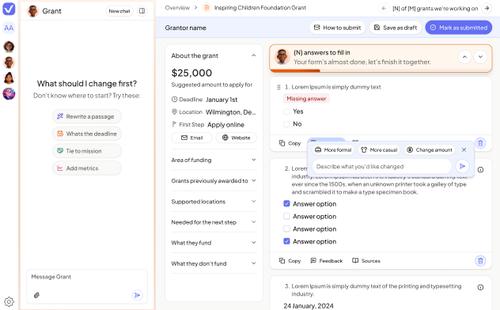
Any change can start in two places: ask Grant in the chat, or work on the page itself - highlight a passage, or modify a whole answer. Wherever it starts, the edit lands where the work is, as tracked changes you can read line by line, and it’s never more than one click from undone.
“Make the first paragraph shorter”The answer is on screen, so even a chat request shows up on the page. Grant never moves you somewhere you didn’t ask to go.
“Updated the first paragraph of answer 7 to be shorter” - specific enough to catch a misunderstanding before it lands.
Tracked edits stay reversible, and anything you keep in the letter is saved as a new version.
Last year 212 children in Wilmington joined our weekend arts program, and 87% came back for a second term.Our program makes a real difference in the lives of many children across the community.
Designing for the bad draft
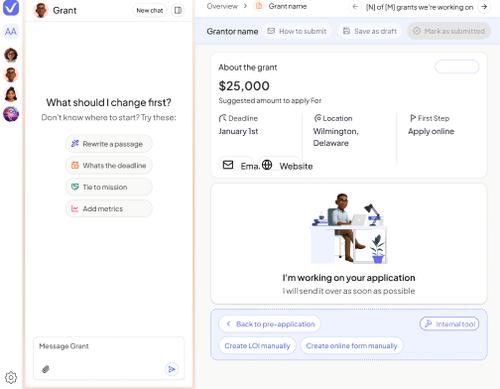
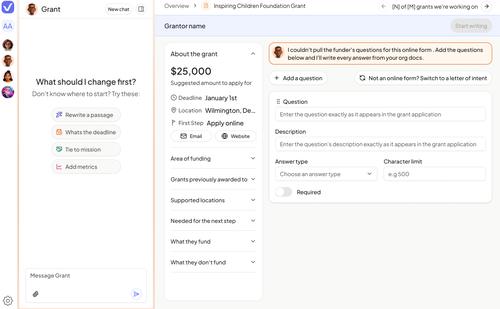
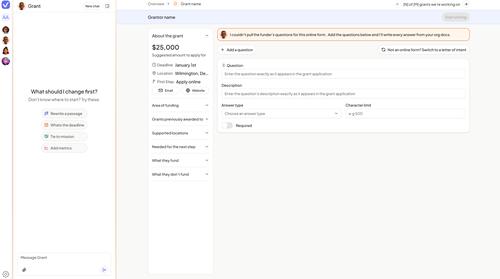
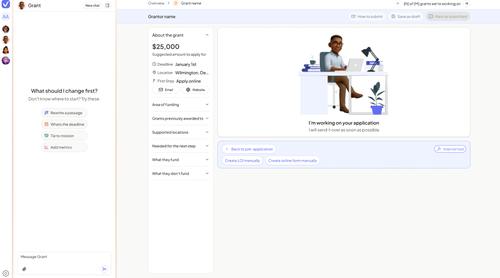
This workspace assumes the draft can be wrong and builds the exits in: versions you can always revert to, empty-document recovery when Grant can’t find the funder’s questions, a review step before anything is sent, and reversible actions with undo.
Not “the model is reliable,” but “the model is probabilistic - here’s how you stay in control when it misses.”
Conversation, where it helps
Ask why a paragraph reads the way it does, ask for a change in plain language, and watch the draft update in place. The conversation proposes. Nothing leaves the page until you send it.
This one is real - go ahead and use it. Ask Grant to “make question 7 shorter,” highlight a passage and hit Modify, or answer a question.
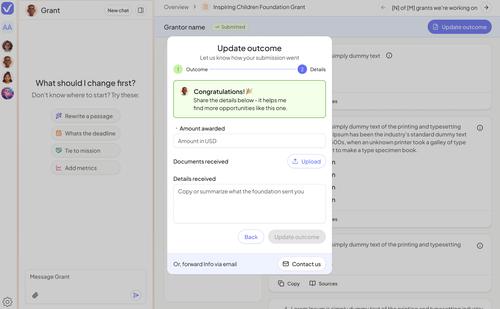
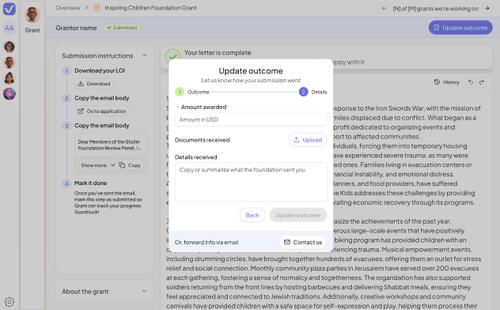
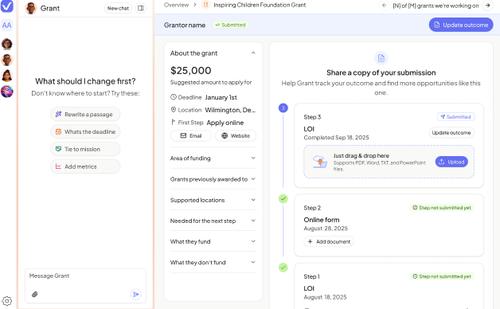
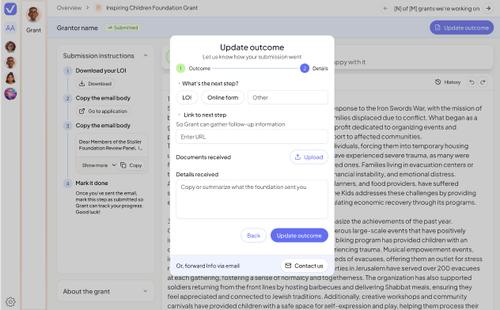
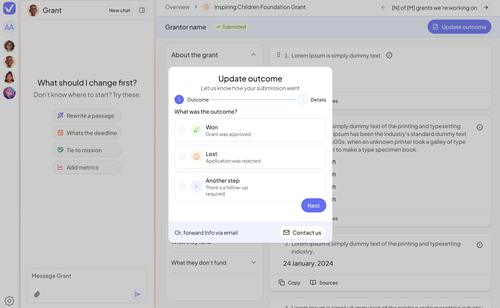
When the outcome is “another step”
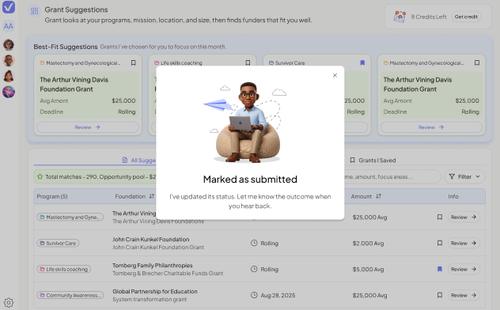
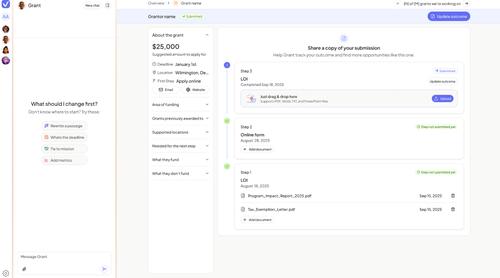
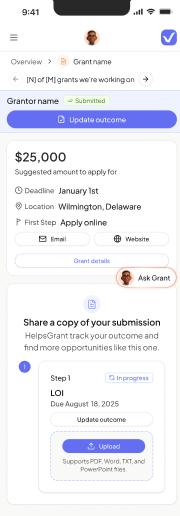
Grants are rarely one-and-done - a letter of intent can open the door to a full application. So when you mark the outcome as another step, Grant starts the next draft, carrying the funder’s link, instructions and your documents forward, while keeping the original intact.



What the model does vs. what I designed
Reflection
The model could write a grant on day one. What took design was everything around it - enough control, enough honesty about the draft’s limits, and enough of a way back when it missed, that a nervous expert would trust it with something this important.
The best proof wasn’t that Grant could write. It’s that people got an application ready in about 35 minutes instead of an hour - and every word still felt like theirs.
Time to submitPer applicationAn application is ready in about 35 minutes instead of an hour - Grant always wrote the draft. What changed is how fast you can review it.